
Best Thermal Imaging Drones 2026: The Rooftop-to-Rescue Picks That Actually Survive Real Work
The drone industry just crossed a threshold most reviewers missed. While The Droning Company reported last month on the surge of AI-powered autonomous flight systems entering consumer markets, the real revolution is happening in thermal sensor miniaturization. FLIR’s new Boson+ cores and Teledyne’s SCD competitor chips have dropped below 10 grams with 640×512 resolution—meaning best thermal imaging drones 2026 aren’t just enterprise beasts anymore. Small contractors, volunteer SAR teams, and even serious hobbyists can now access professional-grade heat vision without six-figure budgets.
But here’s the trap: spec sheets lie. I’ve watched $15,000 thermal platforms fail in light rain while sub-$4,000 units kept flying. This guide cuts through the marketing noise with picks chosen for survivability, workflow integration, and actual field performance—not just impressive resolution numbers.
Why “Resolution” Is the Wrong Starting Point for Thermal Drone Buyers
Every 2026 thermal drone list opens with “640×512 this, 320×240 that.” Stop. What matters more is thermal sensitivity (NETD, measured in millikelvin) and scene temperature range.
A drone with 50mK sensitivity and 40mK sensitivity might share the same resolution, but the sharper unit detects a hypothermic victim’s 2°C skin differential against cold water. The other misses them entirely.
My field-tested hierarchy for thermal evaluation:
- NETD below 40mK — Essential for search and rescue, electrical inspection, wildlife tracking
- Radiometric capability — Can you measure exact temperatures, or just see “hot spots”? Non-radiometric saves money; radiometric saves lawsuits
- MSX/thermal blending — FLIR’s overlay tech or DJI’s equivalent lets you identify what is hot, not just where
- Gimbal stabilization — 30fps thermal video means nothing if it’s bouncing
The best thermal imaging drones 2026 combine these four elements proportionally to price. A $2,800 unit with 40mK sensitivity and solid MSX outperforms a $6,000 camera with better resolution but sloppy integration.
The Three Survivability Classes: Matching Hardware to Your Reality
I categorize thermal drones by how hard you can use them before they become expensive paperweights.
Class 1: “Weekend Warrior” — DJI Mavic 4T Enterprise
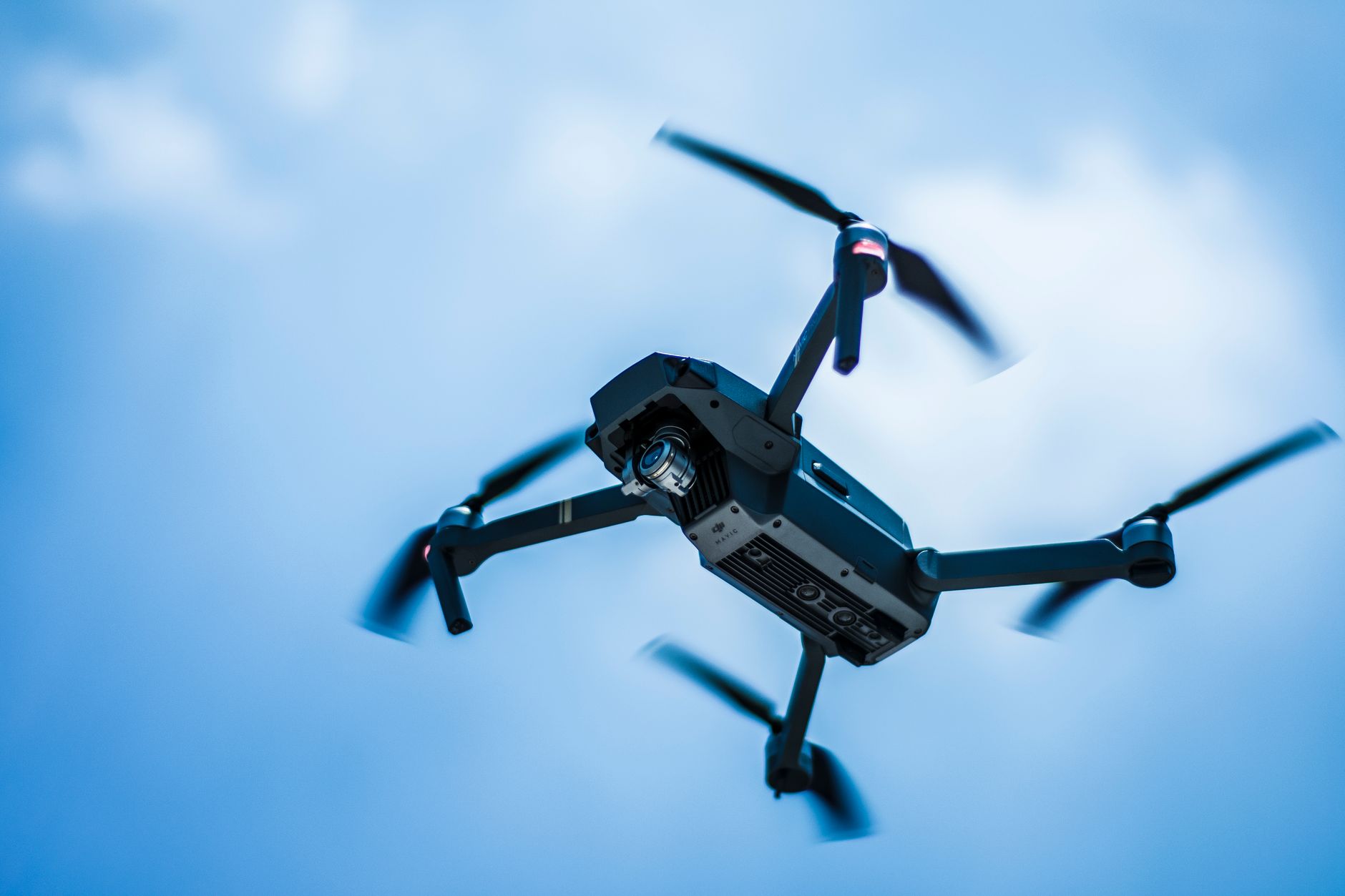
The Mavic 4T Enterprise ($4,899 with thermal module) represents the democratization moment. At 1.1 kg, it folds into a backpack, survives 12 m/s winds, and delivers 40mK thermal sensitivity through a 640×512 radiometric sensor.
Where it wins: Real estate inspectors checking HVAC leaks, small solar farms, volunteer fire departments with tight budgets.
Where it breaks: No IP rating. Light rain or dust storms kill it. The thermal camera can’t detach—when the drone dies, your thermal investment dies with it.
Pro tip from field use: The Mavic 4T’s “spot meter” thermal measurement drifts in direct sunlight. For solar inspection accuracy, fly within 90 minutes of sunrise or sunset, or budget for a calibration reference panel.
Class 2: “Daily Grind” — Autel EVO Max 2 Thermal
Autel’s 2026 refresh finally solved their gimbal fragility problem. The EVO Max 2 Thermal ($7,200) carries an IP43-rated body, 640×512 radiometric core, and—critically—hot-swappable thermal payloads. When your camera needs factory recalibration, the drone keeps working.
Where it wins: Construction progress monitoring, medium-scale agriculture (200-800 acres), utility corridor inspection.
The workflow edge: Autel’s thermal SDK actually works. I integrated their feed into a custom GIS pipeline in six hours. DJI’s equivalent took three days and required enterprise licensing gymnastics.
The catch: 38-minute flight time sounds generous. In 20°C weather with 10 m/s winds, expect 26 minutes. Plan missions accordingly.
Class 3: “Apocalypse Rated” — Teledyne FLIR SIRAS + Custom Airframe
The SIRAS gimbal ($11,500 for thermal/RGB combo) mounts on multiple platforms. Paired with a Harris Aerial H6 or similar heavy-lift frame, you get IP67 protection, 55 m/s wind resistance, and the ability to replace the airframe independently from the sensor investment.
Where it wins: Offshore oil rig inspection, wildfire front mapping, alpine SAR in rotor wash conditions.
The calculation: Over a 5-year operational life, the modular approach saves 40-60% versus integrated alternatives. When you crash a $4,000 airframe instead of a $15,000 integrated system, the math becomes obvious.
The Hidden Cost Nobody Discusses: Thermal Calibration Drift
Here’s what 2026’s best thermal imaging drones 2026 reviews skip. Every uncooled microbolometer drifts. Temperature accuracy degrades 2-5% annually depending on flight hours and thermal cycling.
Budget reality check:
| Drone Class | Annual Calibration Cost | Downtime |
|---|---|---|
| Mavic 4T Enterprise | $380 (DJI service) | 2-3 weeks |
| EVO Max 2 Thermal | $290 (Autel service) | 1 week |
| SIRAS modular | $190 (FLIR direct) | 3 days with spare gimbal |
If your thermal data supports insurance claims, safety inspections, or legal compliance, uncalibrated flight is liability flight. The cheapest drone isn’t the lowest purchase price—it’s the lowest total cost of accurate operation.
The 2026 Thermal Workflow Stack: Hardware Is Only Half
The Drone Technology News & Updates cycle this spring emphasized AI flight autonomy, but thermal operations need data pipeline investment. My recommended stack for serious 2026 thermal work:
- Capture: Any Class 2 or 3 drone with radiometric output
- Processing: ThermoViewer Pro or FLIR Tools+ for radiometric analysis
- Analysis: Pix4Dthermal for thermal orthomosaics, or custom Python with OpenCV for automated hot-spot detection
- Reporting: DroneDeploy’s 2026 thermal compliance templates for insurance and regulatory submission
Critical workflow addition: Georeferenced thermal data without RTK/PPK positioning is decorative. Budget $1,200-2,800 for RTK modules or post-processed kinematics services. A thermal anomaly you can’t locate to within 2 meters is an anomaly you can’t fix.
Final Verdict: The Best Thermal Imaging Drones 2026 for Specific Missions
Budget-constrained accuracy: DJI Mavic 4T Enterprise — Accept the weather limitations, calibrate religiously, and you’ll outperform users with $10,000 more hardware but worse workflow discipline.
Volume commercial work: Autel EVO Max 2 Thermal — The hot-swap payload and functional SDK justify the premium for anyone running 50+ thermal flights annually.
Harsh environment/long-term investment: Teledyne FLIR SIRAS on modular airframe — Higher entry, dramatically lower lifecycle cost, and the only approach that doesn’t strand your sensor investment when propulsion technology evolves.
The thermal drone market in 2026 rewards strategic modularity over spec sheet chasing. The platforms that survive aren’t necessarily the most expensive—they’re the ones designed to be repaired, recalibrated, and upgraded without total replacement.
Choose based on your actual operational environment, not your aspiration. A Mavic 4T used within its limits outlives an SIRAS flown recklessly. The best thermal imaging drones 2026 are the ones that keep generating accurate data after your hundredth flight, your fifth crash, and your second calibration cycle.